International Criminal Court · Situation ICC-01/09
Six people summoned. No crimes-against-humanity verdict.
Kenya’s attempt to create a special tribunal failed. The international investigation started in 2010 and prosecutors concluded its investigation phase in 2023.
ICC Kenya docket
ICC pretrial decisions
ICC public case docket
View original editorial graphic
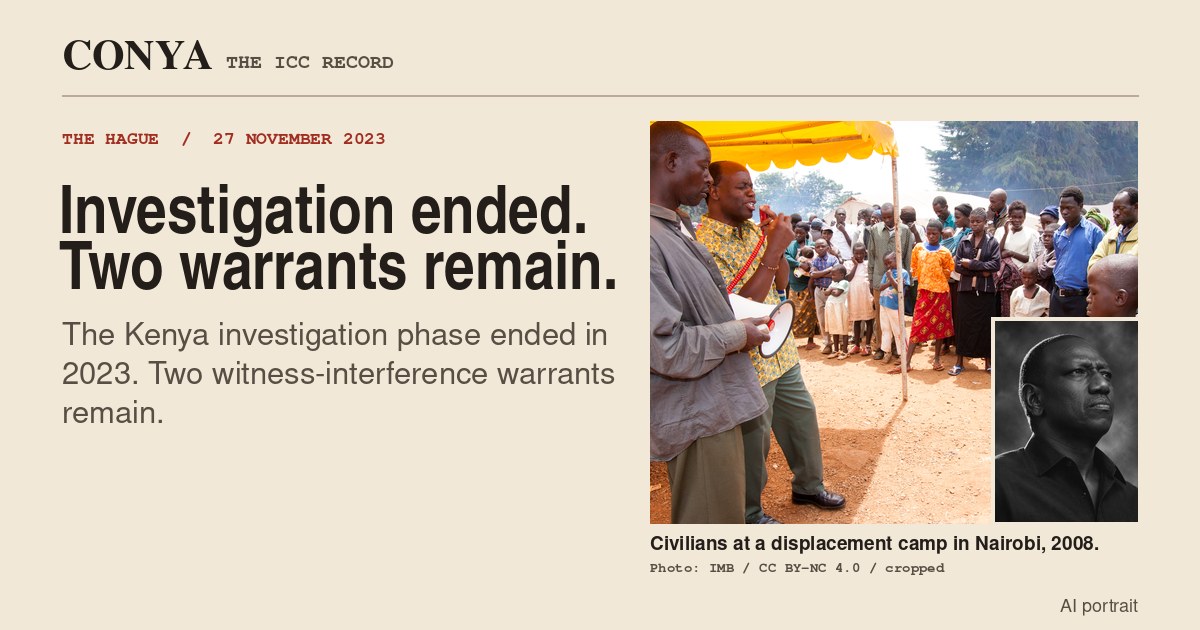
Original CONYA editorial graphic · AI portrait, not an archive photograph or evidence of an individual’s responsibility.
Civilians at a displacement camp in Nairobi, 2008. Photo: IMB / CC BY-NC 4.0 / cropped · Optional third-party graphic source ↗ · License ↗ · Noncommercial use only.
Download portrait card ↓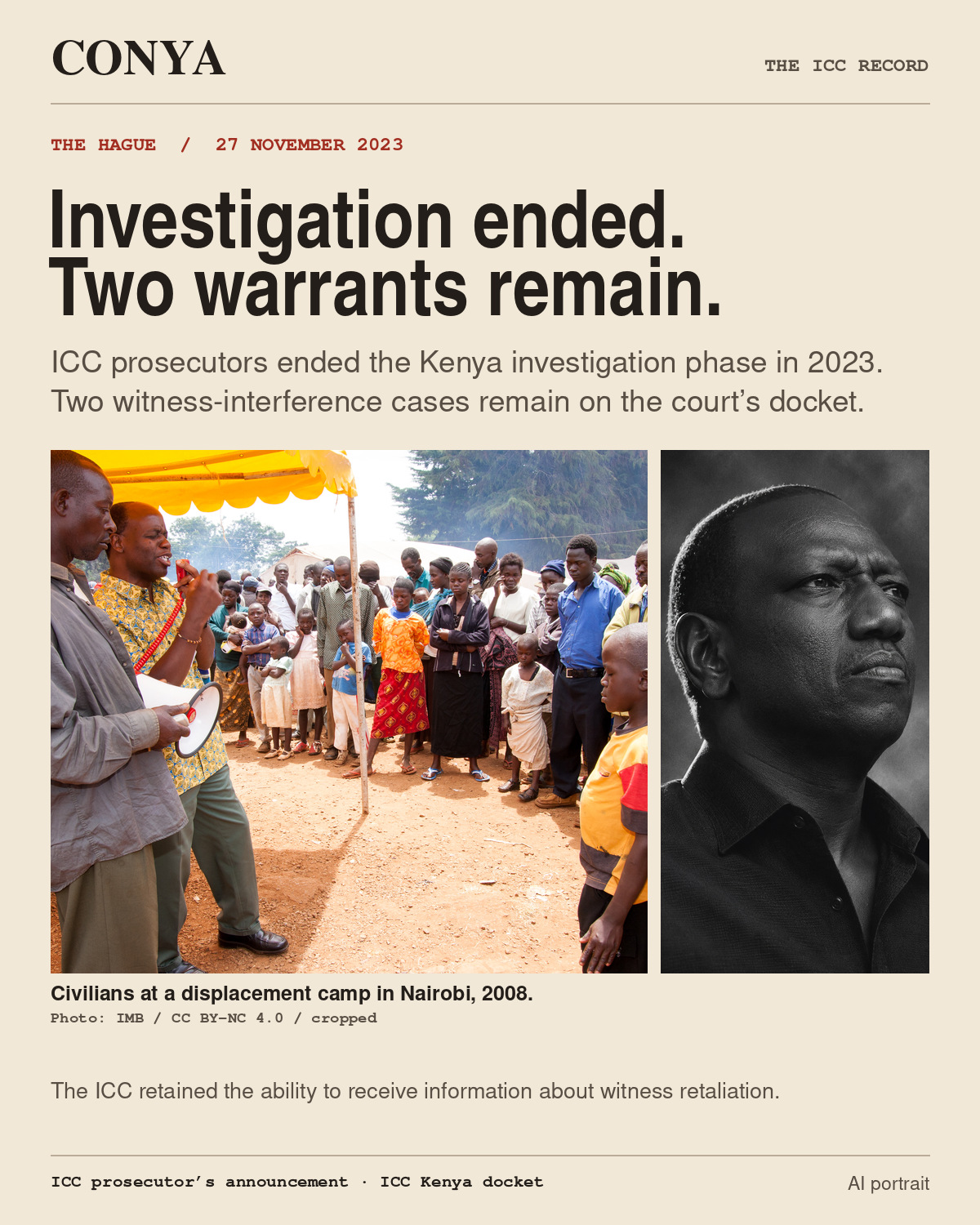
View documentary photograph · Noncommercial use only
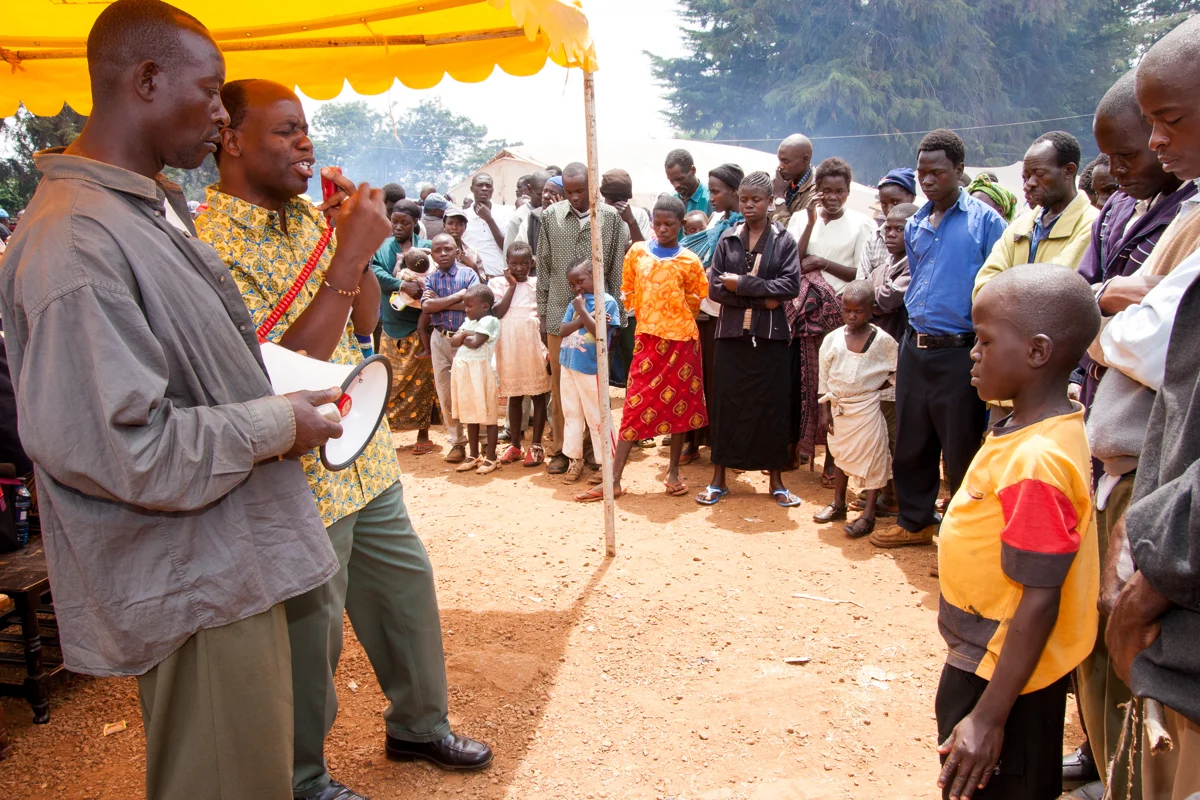
People in a Nairobi displacement camp during the election violence, 2008.
© / Credit: International Mission Board · Source ↗ · License ↗
CC BY-NC 4.0 · Available for this independent, noncommercial research edition; not licensed for commercial reuse.
From the Waki inquiry to The Hague
The Waki Commission recommended a special Kenyan tribunal. The first bill failed in Parliament in February 2009. Later that year, Kofi Annan’s mediation panel transmitted a sealed list of possible suspects and supporting material. ICC prosecutor Luis Moreno Ocampo sought authorisation in November 2009. Judges approved an investigation under the Rome Statute on 31 March 2010.
Kenya challenged admissibility. Appeals judges upheld the cases in 2011 because Kenya had not shown that it was investigating the same people for substantially the same conduct.
Claim provenance: [1] Parliament’s Waki archive [2] ICC prosecutor’s timeline [3] Admissibility appeal
Three thresholds in plain language
Authorising an investigation requires a reasonable basis to proceed. Confirming charges requires substantial grounds to believe the person committed the alleged crime. A conviction requires proof beyond reasonable doubt. Evidence that an attack occurred and evidence that a particular defendant was legally responsible must each be assessed.
Claim provenance: [4] ICC Rome Statute, Articles 7, 15, 17, 61 and 66 [5] ICC case docket
What ended and what remains
Prosecutors withdrew the charges against Francis Muthaura and Uhuru Kenyatta. Judges vacated the charges against William Ruto and Joshua arap Sang. Judges declined to confirm charges against Henry Kosgey and Mohamed Hussein Ali. No crimes-against-humanity case in this situation produced a verdict on guilt.
An external expert review released in 2019 criticised investigative delays, witness and intermediary dependence, and other weaknesses alongside cooperation problems. In November 2023 the prosecutor’s office concluded the Kenya investigation phase after assessing its information. It retained the capacity to act on witness retaliation and said that the separate Article 70 cases concerning Walter Barasa and Philip Kipkoech Bett would continue. The ICC’s report to the UN covering the year through July 2026 records both arrest warrants as outstanding.
Claim provenance: [6] ICC situation docket [7] External expert review and response, 2019 [8] Statement concluding the investigation phase [9] ICC annual report to the UN, para. 8(d) [10] Barasa docket [11] Bett docket
Footnotes & source documents
- Parliament’s Waki archive ↗
- ICC prosecutor’s timeline ↗
- Admissibility appeal ↗
- ICC Rome Statute, Articles 7, 15, 17, 61 and 66 ↗
- ICC case docket ↗
- ICC situation docket ↗
- External expert review and response, 2019 ↗
- Statement concluding the investigation phase ↗
- ICC annual report to the UN, para. 8(d) ↗
- Barasa docket ↗
- Bett docket ↗
Further optional archive
ICC Kenya official record
The court’s Kenya situation page collects the public documents and individual case records.
International Criminal Court
Link to publisher
Content warning: this optional external archive may contain disturbing accounts or imagery of violence. Third-party content loads only when activated.
Open original archive ↗