Conya · Political satire ·
Cartel Kuku: The Official Poultry of Conyan Democracy
From coordinated clucking online to intimidation in the streets: meet the fictional chickens guarding Conya's patronage coop.
Kuku means chicken in Kiswahili. Cartel Kuku is Conya's invented satirical name—not a factual designation for an identified group. Dictionary ↗
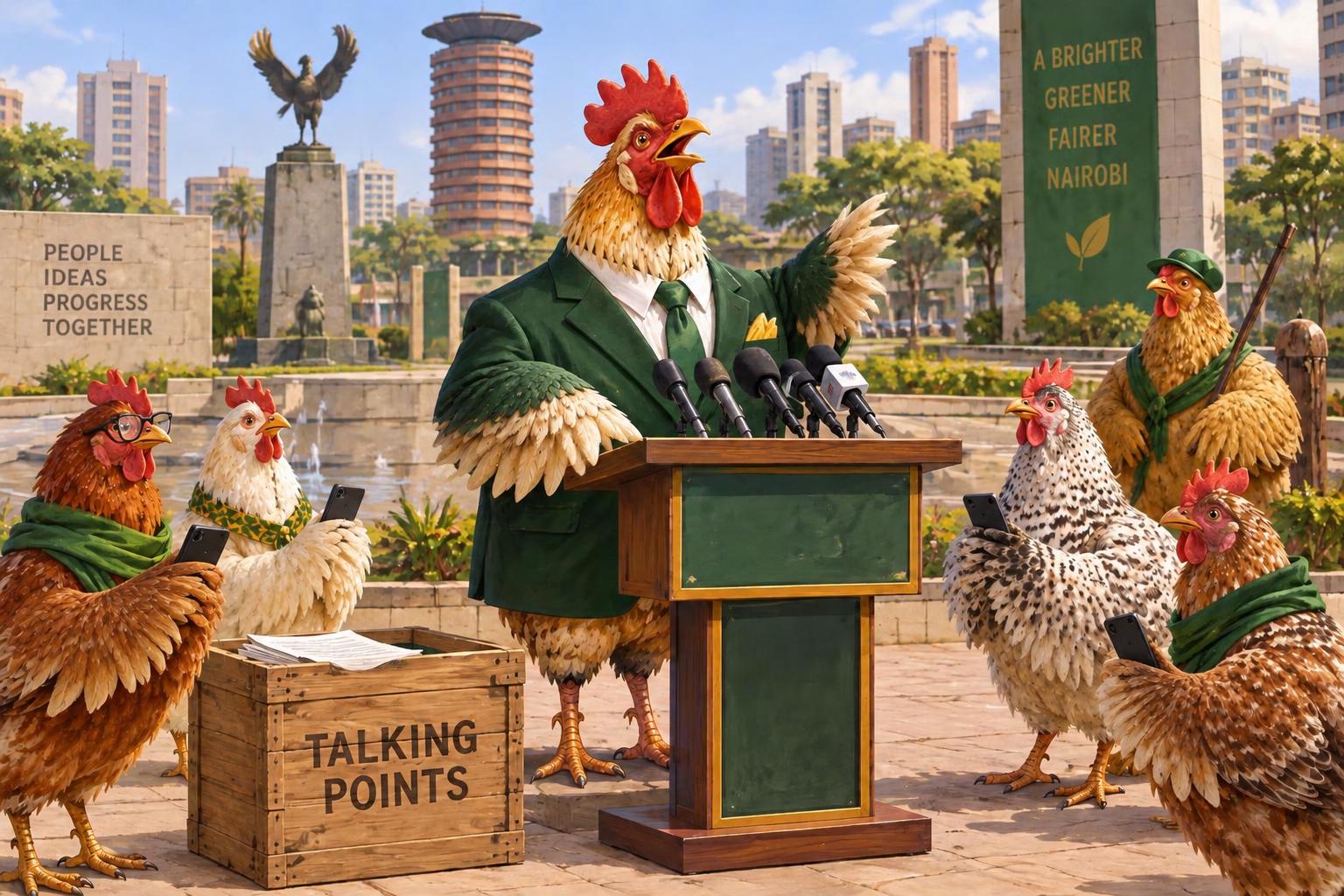
In the Republic of Conya, every scandal arrives with a soundtrack: coordinated clucking. Meet the Cartel Kuku—Conya's fictional political chickens. Online, they peck at critics. In the street, they arrive with matching instructions and an impressive lack of independent thought. Officially, they are concerned citizens. Unofficially, their concern begins when the feed arrives.
What Is a Cartel Kuku?
In Conya, a cartel is not necessarily an organisation with a letterhead. Sometimes it is a remarkably punctual chorus. Cartel Kuku is our invented flock of political chickens: a joke about coordinated harassment, hired intimidation, propaganda and patronage. The joke is about behaviour and incentives, not a factual designation for an identified group.
An ordinary supporter is allowed to disagree, campaign, argue and be wrong on the internet without being enrolled in our poultry register. Defending a politician is not proof of payment. The satirical specimen is the arrangement in which apparently spontaneous outrage arrives with a timetable, a script and someone quietly checking attendance.
Independent thinkers. One group admin. Every chicken has a personal opinion, which is updated automatically when the administrator posts the morning bulletin. Conya calls this participatory democracy. The participation is local; the thinking has been outsourced.
Field Guide to the Flock
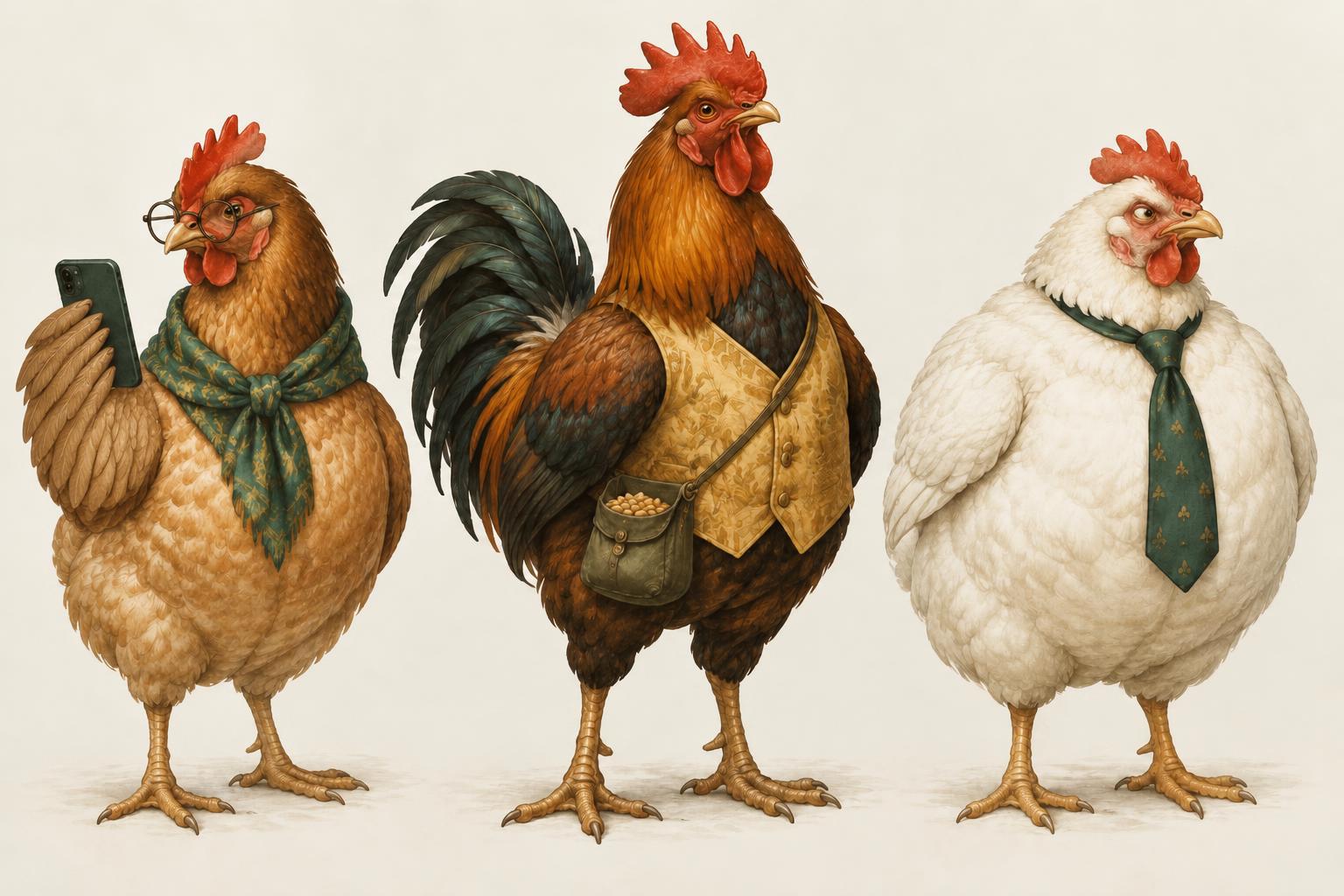
The Hashtag Hen can detect a critical article before reading it. She has already forwarded the rebuttal, requested a screenshot and declared the journalist biased. Her smartphone battery lasts longer than her curiosity. Twelve accounts. One sentence. Zero coincidence, according to the spokesperson.
The Allowance Rooster is a free-range patriot with centrally supplied feed. His devotion is immeasurable, although the transport refund is itemised. The Denial Broiler specialises in statements so comprehensive that they deny the event, the location, the photograph and, when necessary, the existence of chickens.
All three are imaginary. Their field marks are comic inventions, not a checklist for accusing strangers. A matching slogan is a reason to examine a claim, not permission to name, expose or threaten the person repeating it.
- Common name
- Cartel Kuku
- Classification
- Patronage poultry (fictional)
- Habitat
- Comment sections, tinted convoys and the edges of power
- Diet
- Allowances, rumours and forwarded talking points
- Distinctive call
- We were not instructed!
- Natural deterrents
- Evidence, independent journalism and functioning institutions
- Conservation status
- Protected by connections
Natural Habitat: the comment section, the convoy and the patronage coop
The comment section offers shelter from inconvenient paragraphs. The convoy offers tinted windows and the comforting sensation of travelling near importance. The patronage coop offers proximity to a feeder, which the flock describes as access to policy. In our Nairobi-inspired fictional setting, even the pavement outside the ministry has a protocol officer.
The flock prefers spaces where a question can be mistaken for disloyalty. Asked where the money went, it asks why the questioner hates development. Asked for a document, it produces an atmosphere. An atmosphere has no audit trail and photographs beautifully from a moving vehicle.
Feeding Patterns: allowances, rumours, hashtags and access
A rumour is inexpensive feed: it travels quickly, requires no procurement notice and can be served cold. A hashtag is the branded sack. Access is the premium supplement. The allowance is independent. The outrage is coordinated. Naturally, every distribution is described as a consultation rather than a transaction.
Conya’s fictional accounts department recognises three budget lines: mobilisation, mobilisation refreshments and refreshments for the mobilisation of refreshments. Nobody can explain the outcomes, but everyone can explain why another launch is required. National security: protecting the feeder from the hungry.
Familiar Calls: identical slogans, sudden outrage, coordinated denials
“We were not instructed!” is the distinctive call, normally delivered simultaneously. No orders were given. The flock simply received identical inspiration. Its spokesperson explains that synchronised indignation is a proud cultural tradition recently introduced by a forwarded voice note.
The flock’s favourite punctuation mark is the accusation. Its favourite evidence is another member of the flock agreeing. A correction is received as an attack; an unanswered question is declared a victory. They do not debate the evidence. They peck at the person holding it.
Migration Routes: from group chat to street corner
In the fictional field guide, migration begins with a message saying there is no meeting, followed by the meeting location. The flock arrives spontaneously in pre-arranged transport. Each volunteer has independently selected the same slogan and independently asked the same person about lunch.
Our background chicken carries a plain stick to expose the absurdity of intimidation dressed as civic participation. A stick is not a manifesto. The flock remains unconvinced. The image is a joke about coercion, not a demonstration, instruction or invitation to use violence.
Defensive Tactics: distraction, dogpiles and demanding silence
A question about a missing public record becomes a debate about the questioner’s tone. A report about failed services becomes a celebration of a road somewhere else. The Screenshot Warfare Coop files the critic’s sentence without its context, then praises itself for preserving the record. The record is smaller now and much easier to misrepresent.
These are descriptions of an invented satirical flock, not guidance for conducting harassment. The sensible response to a claim is to check it. The sensible response to intimidation is not a competing mob. Evidence and functioning institutions are less theatrical, which is precisely why the chickens dislike them.
Who Owns the Coop?
The important question is not which chicken shouted loudest. It is which incentives reward the shouting, who benefits when scrutiny disappears and whether public institutions can follow money and responsibility without stopping at a well-connected gate. Satire can ask those questions without inventing an answer about an identifiable individual.
Conya is a Kenya government parody. Its poultry is fictional, not an allegation that William Ruto, the Ruto government or any named person directs a particular crime. Kenya’s real police-accountability, digital-intimidation and court records belong in sourced reporting, not in the chicken register. When accountability arrives, the flock suddenly remembers it was only volunteering.
Public Safety Note
The joke is invented. Harassment and intimidation can cause real harm. Do not use this feature to label ordinary political disagreement as a paid operation, identify private people, publish personal information, organise dogpiles or retaliate. No victim is a punchline, and no personal account of being targeted is presented here as independently verified fact.
Read the serious reporting separately. Follow dated sources, distinguish allegations from findings and preserve the difference between a joke about a feeder and evidence about an institution. A functioning democracy can tolerate a cartoon chicken. It should not require citizens to tolerate threats.